Aleksis Kivi School
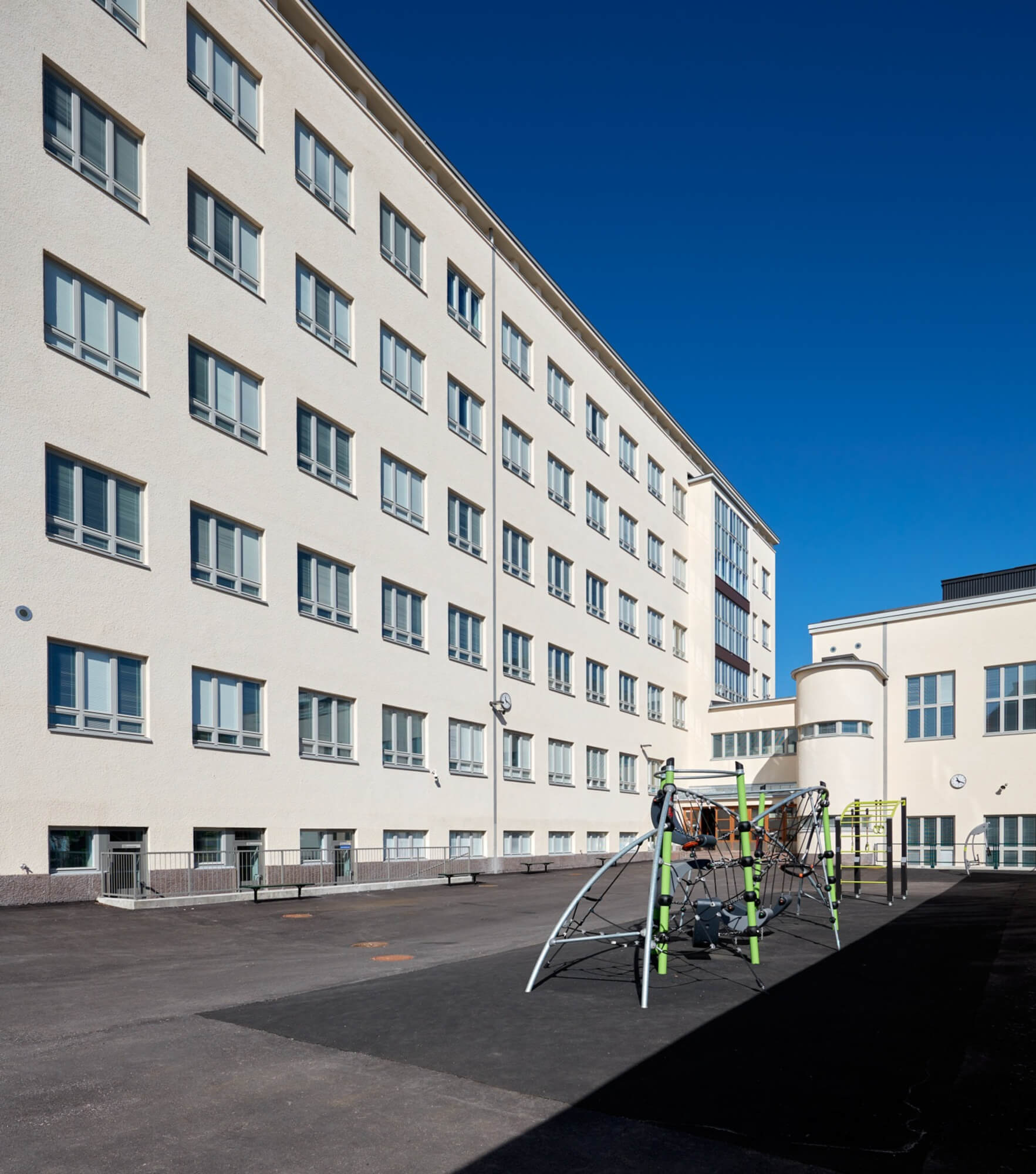
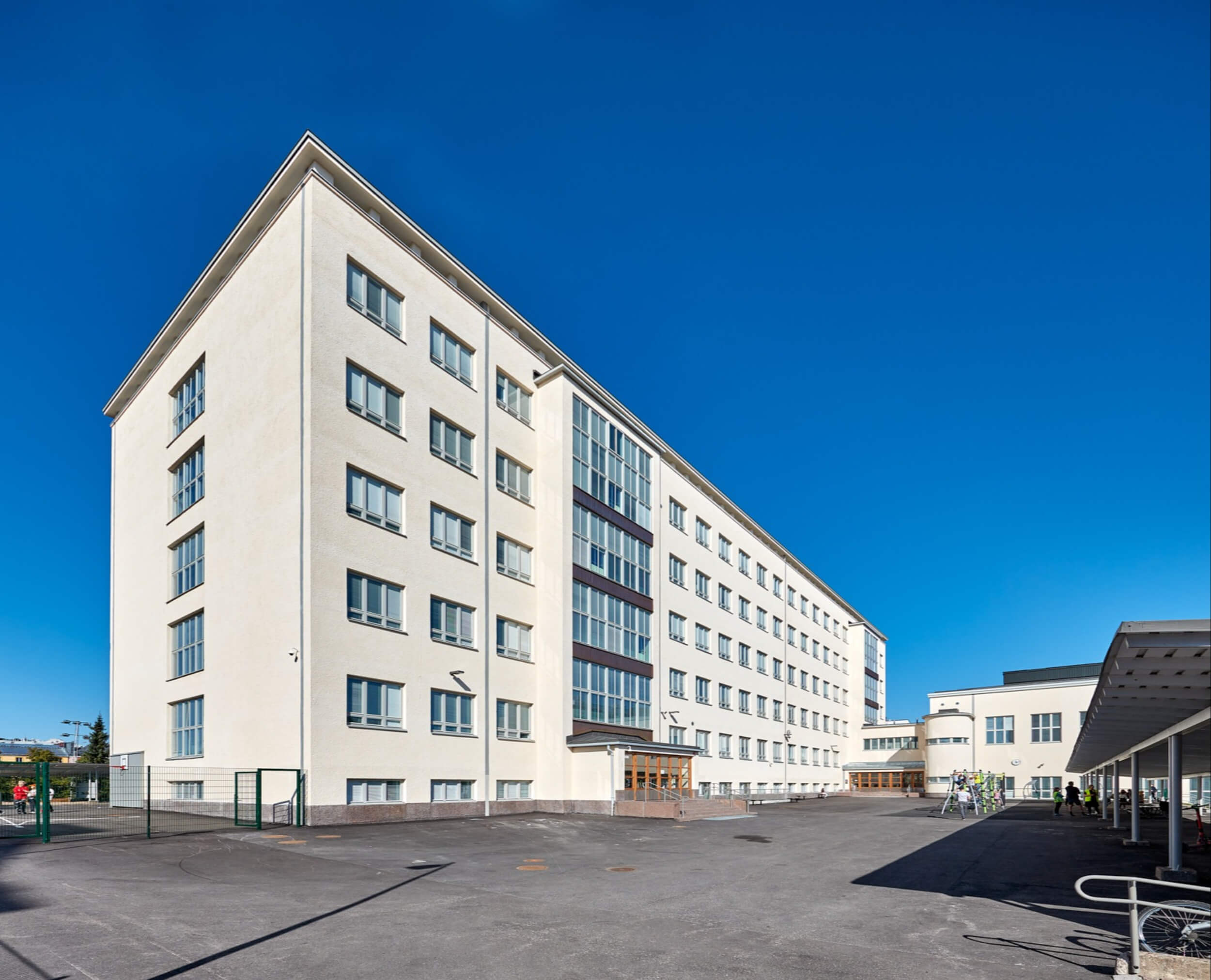
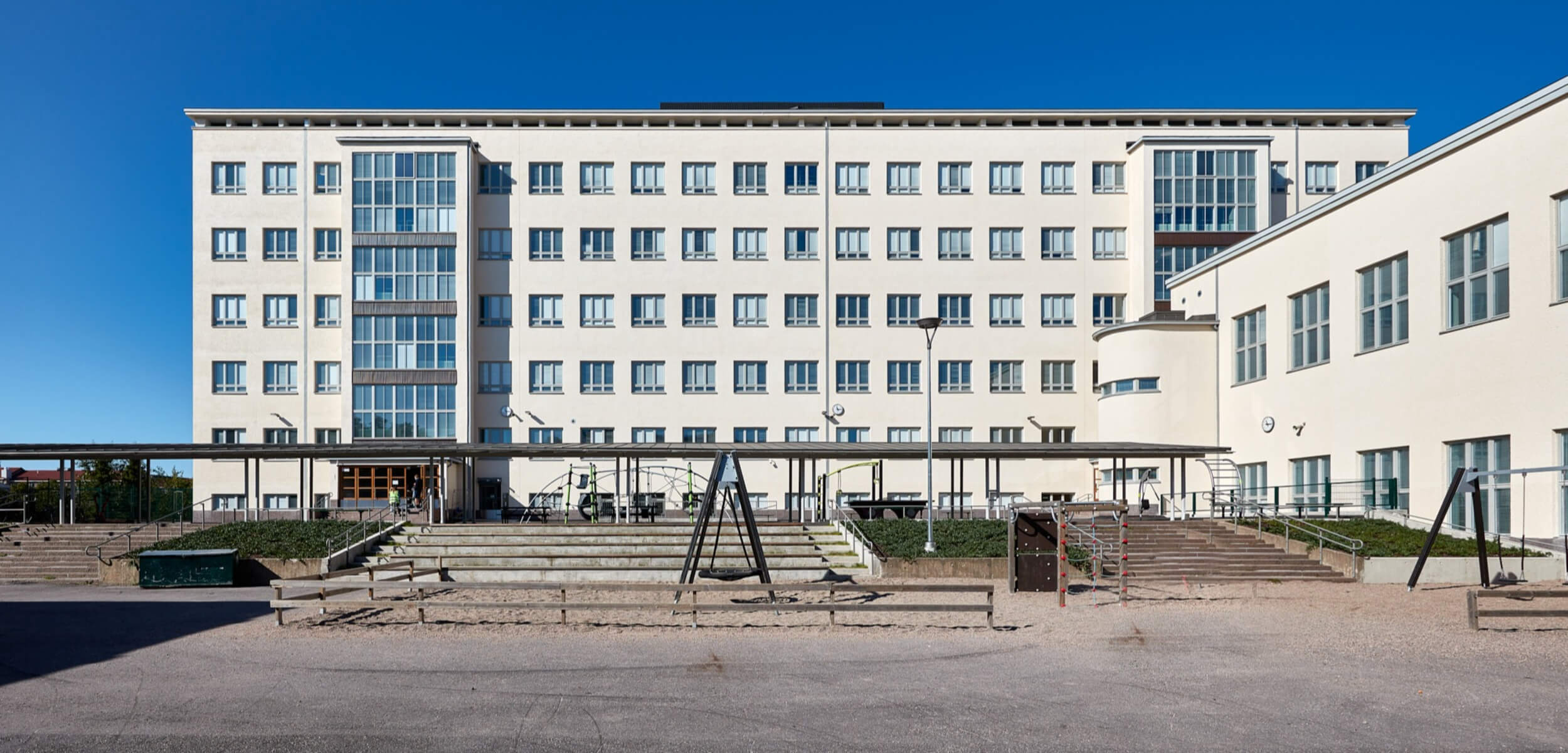
The main building and the hall wing were completed in 1934 (designed by architect Gunnar Taucher), and the workshop wing was finished in 1966.
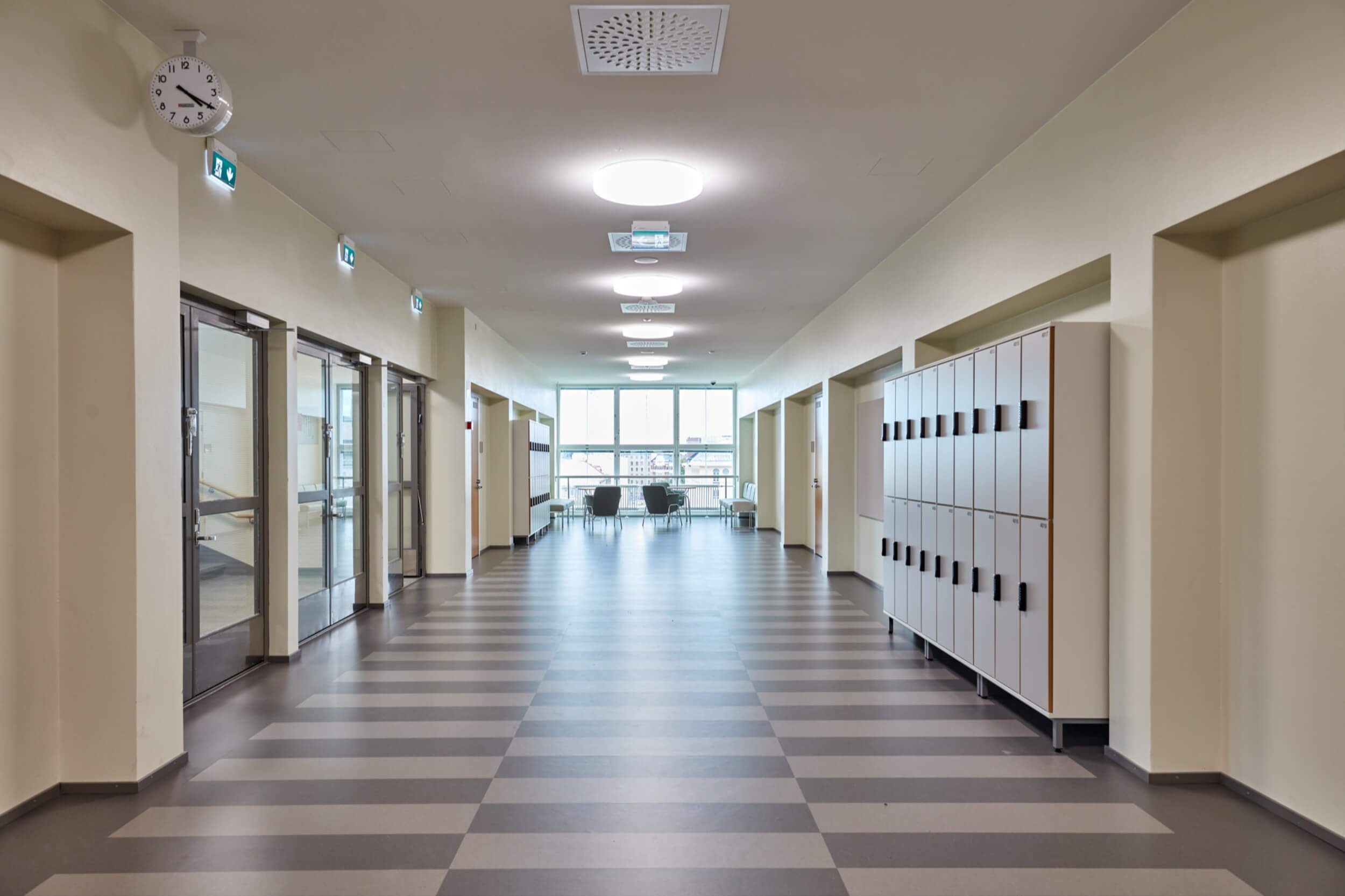
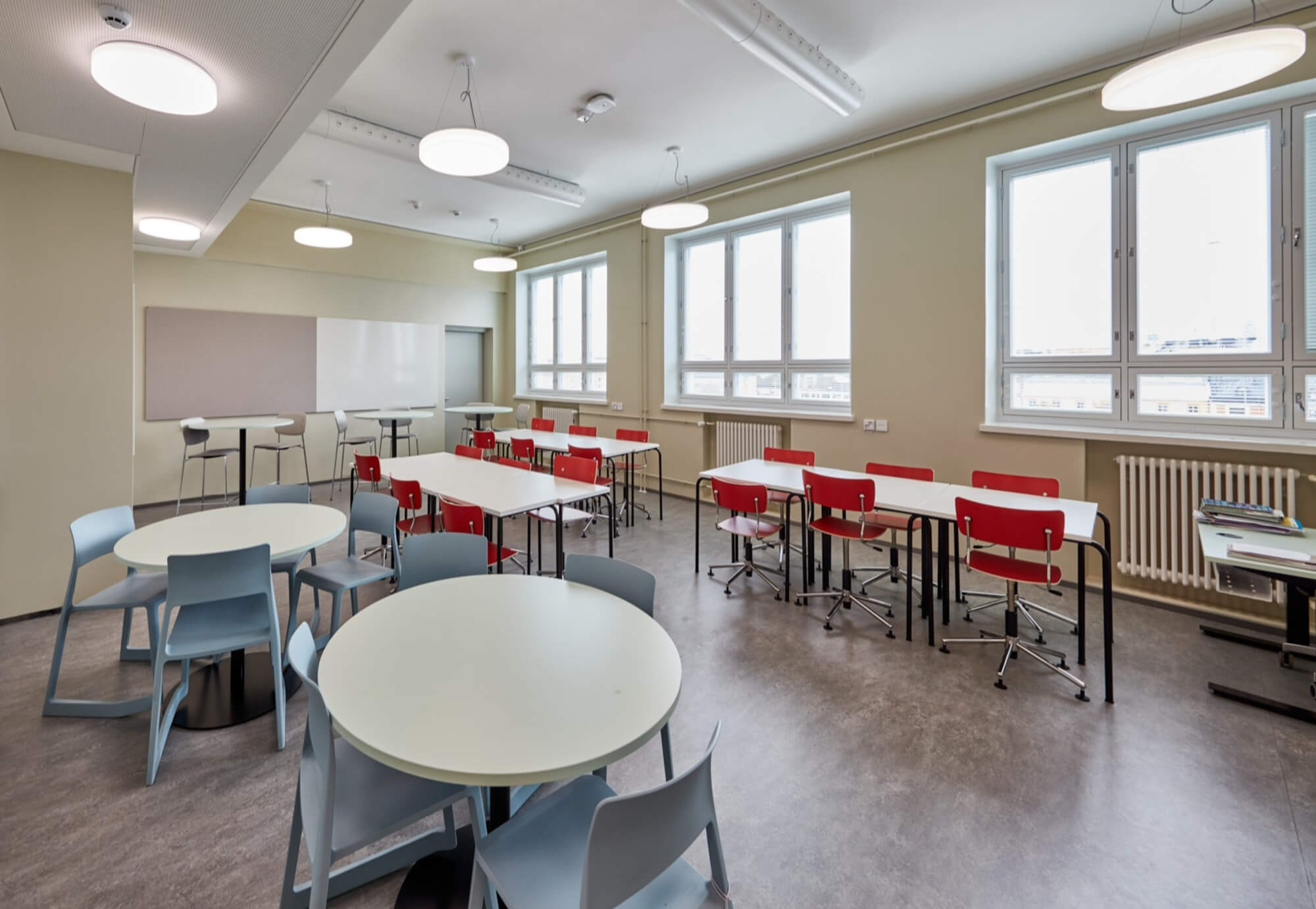
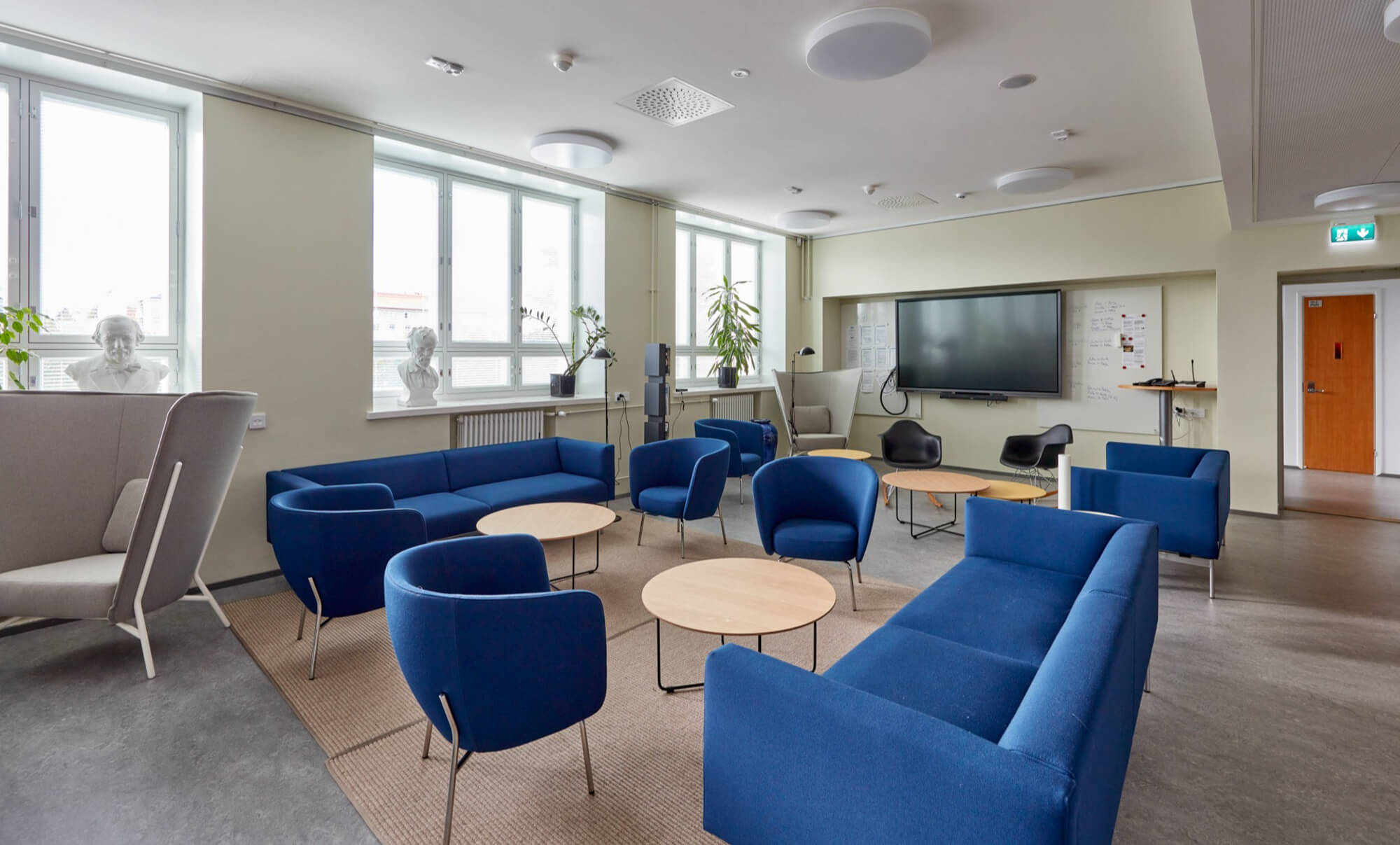
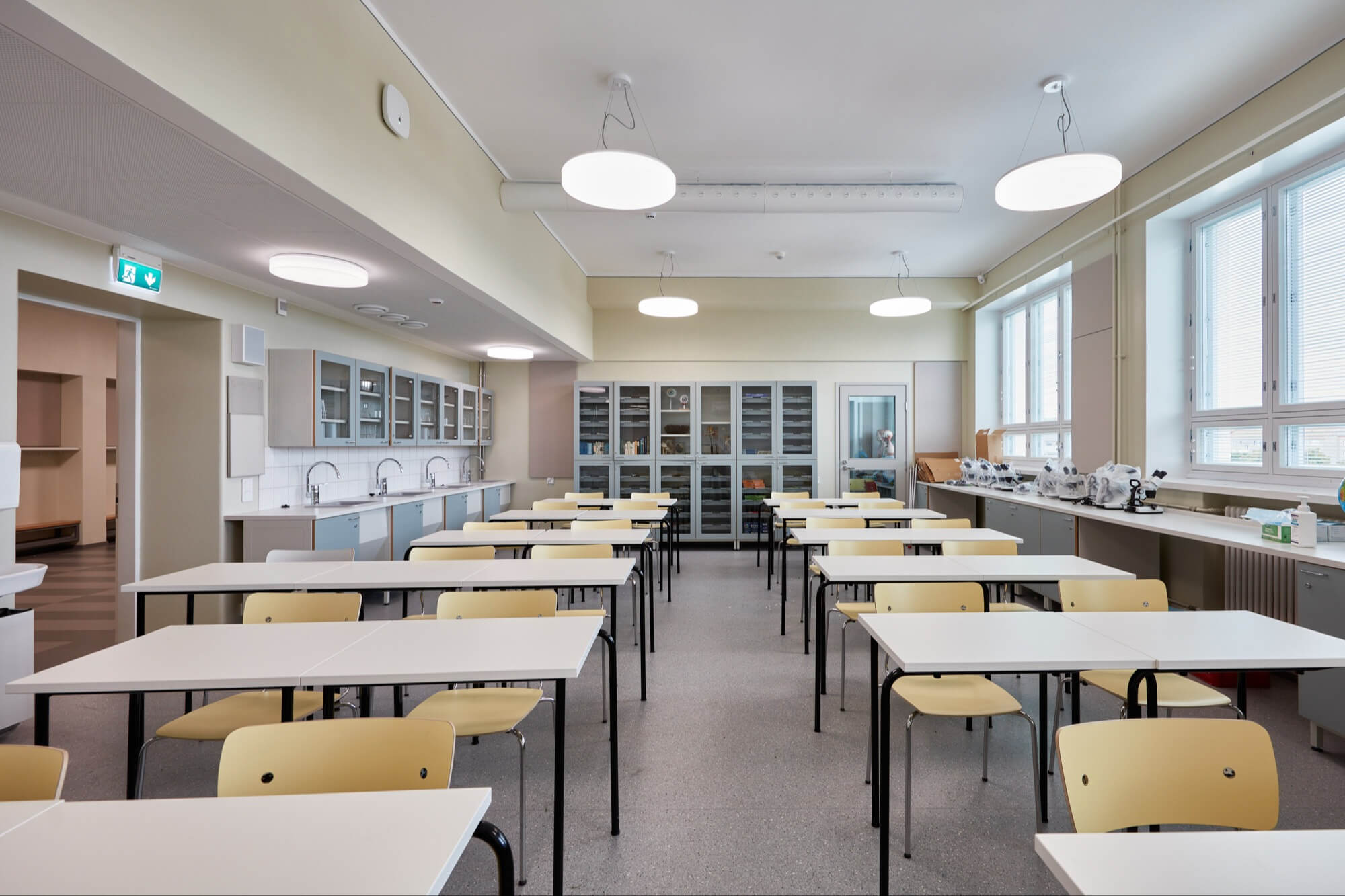
During the renovation, we modernized the spaces to meet current educational requirements, added toilet facilities, renewed the building services systems, and improved energy efficiency. We also replaced the roof coverings, repaired moisture-damaged structures, and installed a new drainage system. The food service facilities were reorganized. New ventilation equipment rooms were constructed in the attic of the main building and in the hall wing. Our aim was to restore the original clear and uncluttered expression of the corridors. Ventilation ducts and electrical shelves serving the classrooms were positioned on the classroom side.
We renewed the façade cornices and windows to match the original in terms of surface, colour and details. Negotiating the solutions and reviewing mock-up repairs and installations were carried out together with a representative from the city museum, a conservator, and the cityscape architect.
The project has been classified as value level 1 in the Helsinki City Planning Department’s study of Opintie.
During the renovation, we modernized the spaces to meet current educational requirements, added toilet facilities, renewed the building services systems, and improved energy efficiency. We also replaced the roof coverings, repaired moisture-damaged structures, and installed a new drainage system. The food service facilities were reorganized. New ventilation equipment rooms were constructed in the attic of the main building and in the hall wing. Our aim was to restore the original clear and uncluttered expression of the corridors. Ventilation ducts and electrical shelves serving the classrooms were positioned on the classroom side.
We renewed the façade cornices and windows to match the original in terms of surface, colour and details. Negotiating the solutions and reviewing mock-up repairs and installations were carried out together with a representative from the city museum, a conservator, and the cityscape architect.
The project has been classified as value level 1 in the Helsinki City Planning Department’s study of Opintie.